
Amazon is bringing video games to Prime Video beginning Thursday with the launch of its cloud gaming service Luna within the app.
Previously a standalone app from Amazon available to Prime members, Luna is now also available on Prime Video on Fire TVs in the US and UK alongside the streamer’s movies, TV shows and sports.
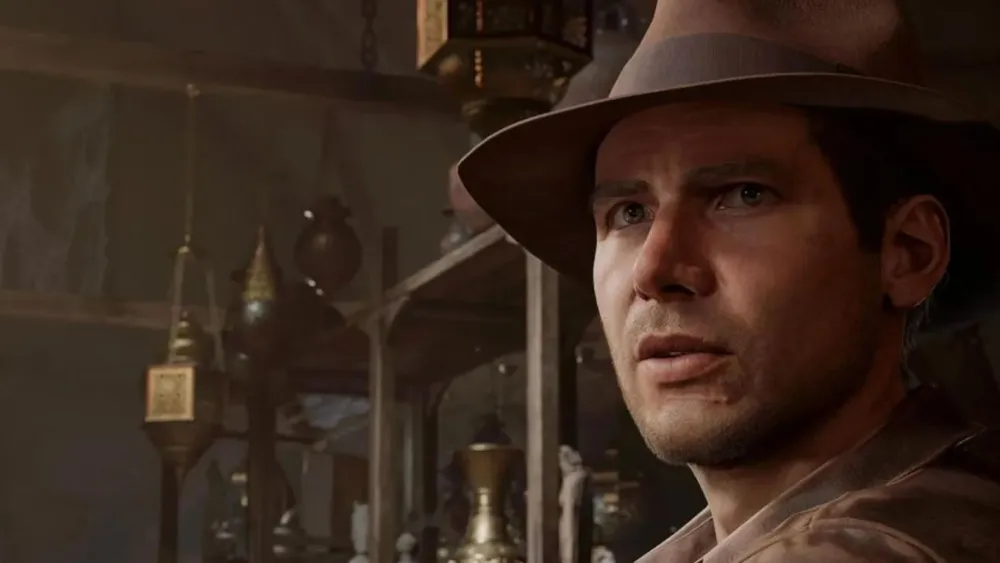
Luna has a library of third-party games that includes “Hogwarts Legacy,” “EA Sports FC 26,” “Indiana Jones and the Great Circle” to Amazon’s “GameNight”-branded party games, like “Clue,” “Ticket to Ride,” and “Taboo.” Amazon’s gaming division has also developed its own additions, including the “Courtroom Chaos” games and co-op card battler “Masters of the Universe: Legends Unite.”
“Prime members can find games the same way they discover everything else on Prime Video, just look for the new ‘Games’ tab and start playing in seconds right on your TV, using a controller or your phone,” the announcement from Amazon reads. “Luna is included with Prime at no additional cost and there’s nothing to download or purchase to start playing.”
Luna will continue to be offered on its own, per Amazon gaming chief Jeff Gattis, for those who do not want to access games through Prime Video. At launch, the Premium tier of Luna (which costs $9.99 per month and can be purchased by non-Prime subscribers) will not be accessible through Prime Video, though that integration is part of the long-term plan.
As for splashy titles owned by Amazon, like the two upcoming new “Tomb Raider” games, and the future of James Bond gaming franchise following the success of “007 First Light,” those games will not be included with Luna — for now. Instead, there will likely be some sort of windowing strategy between when they are released for console and PC and when they could be launched on Luna.
“So I don’t want to make news yet because we haven’t done this yet,” Gattis said. “But I think philosophically, in the way we think of it strategically, you’re absolutely right. I think a windowing strategy, not necessarily, I don’t want to commit to say it would be windowed only to Luna and exclusive. But maybe it goes into a Luna Premium catalog day one while it goes to PlayStation, Steam, and other platforms. There’s still a lot to work out on those fronts, but I’m sharing more of the vision and how we think about the business and the strategy. That’s it. I don’t think we want to take these games entirely exclusive, but we’ll do it on a case by case basis.”
Gattis’ plan to move Luna into Prime Video began last year with the relaunch of the Luna app.
“We saw a pretty significant uptick in our active player base that we’ve maintained,” Gattis said. “So we’ve got about 5x’d our number of active players. Now I’ll always caveat that’s on a small base, so we’re not taking a victory lap on that. But I do believe anytime you 5x anything, it’s a signal that what we’re doing is resonating. And we saw really two things that were resonating with new audiences: that broad appeal, AAA, approachable, relatively simple game mechanics, like you see in a “Hogwarts Legacy” or an “Indiana Jones and the Great Circle,” and hopefully we’ll see in “Tomb Raider,” all the way down through to those phone-as-a-controller, what we call “game night” games that are really bringing people in for shorter sessions. Whether it’s together, couch co-op, and those kinds of things. But we also found some real resonance just around people like to have these 15-20 minute gameplay experiences. That was in some ways a learning for us, is that we maybe underestimated the single player attractability of some of those those game night games.”
Gattis added: “So we feel really good about the content strategy. But when we pop our heads up and go, ‘OK, that was great. We had a great launch. We’ve grown our player base, but that’s 5x on a small base. How do we get to 10x? How do we get to 100x?’ And the number one challenge we have, despite everything we did to push all that value into Amazon Prime, 200 million plus Prime members worldwide, not enough of them know that they have it. So it’s this weird place where we feel really good about the product, and we just have a general awareness and discoverability problem.”
See more from Variety‘s interview with Gattis below.
What made now the time to integrate Luna into Prime Video? Did Netflix’s recent releases of more games you can play on TV through the Netflix app affect this shift?
I think a couple things. The first one is that overall discoverability nature. So by putting it into Prime Video, we have the ability to literally have a games tab in the middle of Prime Video. You click, and all your Luna content will go there. So terms of just the viewership and usage of the Prime Video app compared to what we see on other services, it’s orders of magnitude more eyeballs, and so we do think there’s going to be a major push in terms of discoverability.
I continue to think of this this convergence that we’ve seen over the years between TV and movies and video games. Used to be, we’d see a movie made and a video game would get made maybe a few years later, and we’ve seen some vice versa, ‘Fallout’ being an example of that, but I think we’re starting to see a lot more crossover between these two mediums, and where they’re not really thought of as distinctive. Yeah, one is active and one is passive, but they’re still forms of entertainment. I think from a Prime Video standpoint, having a destination where all these forms of entertainment and engagement can happen on one platform, just seems like a customer-friendly thing to do.
Why do I have to go somewhere else when I’m done watching a TV show to go play video games? And I think Netflix sees a lot of that same kind of view too. Like, we’re an entertainment platform, maybe more than just a pure-play streaming video platform. So that was kind of the the impetus and interest inside of Amazon. The discussions with us in Prime Video and leadership was, yeah, now’s the time to do this. It certainly wasn’t a reactive statement to, Netflix is doing this and we need to go run at it. And in fact, a lot of these plans were in place before we really knew what Netflix was doing. But I think it’s both of us sort of reading the tea leaves on how customers are behaving and just moving hopefully in the direction that things are going.
Were there discussions about limiting which games you make available through Prime Video — like only the party games vs. the AAA titles?
We obviously did talk about it. I have a kind of almost a religious conviction around not bifurcating catalogs. This goes back to my Xbox time as well. There were always discussions, what if we did this thing over here and we split out this? And I just think it creates a lot of customer confusion. And from a business standpoint, when we’re in the business of trying to explain to our customers why a certain thing is available here and not available there, it creates confusion. I’d say the other part, and this kind of goes back to the Netflix bit. And it to be clear, I don’t really see them as a competitor. We’ve kind of joked with them that I think we actually really want them to be successful. I think their success in many ways is our success, and vice versa. And I genuinely mean that because I think we versus the PlayStations and Xboxes of the world have a very different point of view on this. Where we do have different approaches is [Amazon] still very much believes in controller-based AAA games. We think that those do have a place in the mainstream gaming discourse. We think that some of the tie-ins, a lot of those, a lot of those big IP movies and TV shows, are going to lend themselves to these big narrative-driven, storytelling-type AAA games. And so we’ve invested there. Netflix has gone kind of the other route. They believe in native mobile games as a way to bring people in. We haven’t done that yet, so I think there’s some differences in our approach.
But I think we both share the broader vision of trying to unlock audience that isn’t being reached today by the incumbents. And that problem is only, unfortunately for the market, getting worse when you start to think about a $1,000 Steam Machine, to start. Rumors of Xbox and PlayStations pushing $1,500- $2,000. It’s just a kind of a reality of our industry right now. But you can you fast forward a couple years– I was telling somebody this morning, a couple years ago when I was at Xbox, we had this Xbox Series S on discount for holiday. It was $190. Now you’re in a world three or four years later where we’re talking about $1,500. So I think at some point, cloud gaming has sort of been this thing, almost technology in search of a problem. I think the problem might be arriving. So our business is not predicated on moving console players immediately over to cloud or getting people to get rid of their gaming PCs. But also, hey, if that happens sooner, we certainly wouldn’t complain.
But that’s the part I worry about: mainstream players getting crowded out or just priced out of the market.
Will the upcoming “Tomb Raider” games and future James Bond games be included with Luna?
No concrete announcements that we’re making here. I have said very publicly that the strategy is to really leverage our big IPs, the ones that make sense. ‘Tomb Raider,’ it’s we have we have the two games coming, and it’s tied to a TV show. That is sort of, from a content perspective, why we think Amazon makes sense here. So we look forward to four or five years from now where you think about Amazon, ‘Oh, that’s the place that has “Tomb Raider” and these action-adventure games. Oh, there’s Bond and there’s the Bond films.” That is clearly the vision. Specifically to Bond, because everybody asks, yes, we have the rights. We did not have the rights to this game. IOI made the game. They made an awesome game. If you haven’t played it, I encourage you to do so. It was thoroughly fun. And so everybody asks, “What about a sequel?” I think obviously, given the success of the game, a sequel makes a ton of sense. We just haven’t gotten into those conversations yet with IOI or anybody else, for that matter. I always say, trust that we’re going to do right by the game. If we’re going to make another game, it’s going to be a fun game. We’re going to pick the right people to make it.
How are you seeing the breakdown between Luna’s regular player base of activated Prime members vs. the Premium tier of paid Luna subscribers?
The player growth is largely coming through Prime, and that’s good, because that’s the strategy. That’s why we’re doing this and we want to continue to do that and really use that as our growth engine. But the goal is to move a lot more people up to Premium. Obviously, we need to continue to invest in Premium and create a real value proposition where people move up the stack. Not surprisingly, the people that do pay for Premium are engaged more every month, more daily active users, more hours per month. That kind of checks out with what you’d expect. But our general philosophy is, leverage Prime as our growth engine to bring people in, move a certain percentage of those people into the Premium SKU. That’s sort of how the long-term business model works for Amazon. The goal of this is to build a sustainable gaming business for Amazon that is material to our P&L. It’s not to just be another Prime benefit.