
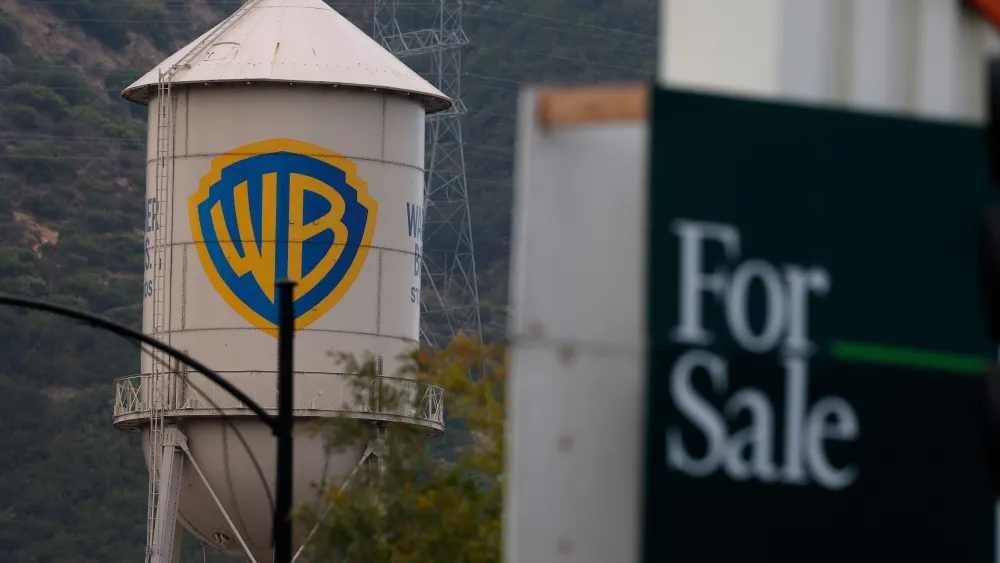
Privately, some top executives at Warner Bros. Discovery are rooting for the 12 states that have sued to block Paramount Skydance’s WBD takeover to win in court and get the megadeal nixed.
Read more ‘The Odyssey’ by the Numbers: 6 Ways Christopher Nolan’s Epic Is Shattering Box Office Expectations
What’s obvious, according to multiple sources, is that there’s a sizable contingent at Warner Bros. of people who don’t want the merger with Paramount to happen. And the prevailing feeling among some at WBD clearly is a hope that the state attorneys general lawsuit will gum up the works long enough to cause the deal to fall apart. (A rep for Warner Bros. Discovery declined to comment.)
Paramount has agreed to put the Warner Bros. Discovery merger on ice pending the outcome of the trial in the antitrust case brought by 12 Democratic state AGs. That will delay the merger for at least a few months, and potentially up to a year or more, as the litigation plays out in court. The next step in the process will be negotiating for the trial date: Paramount wants it to start this fall, while the states want it to commence in 2027. The parties could potentially negotiate a settlement. But if the case goes to trial and the states prevail, Paramount would appeal the decision — and the merger could remain in legal limbo into the back half of 2027.
While some at Warner Bros. Discovery hold out hope that the Paramount pact will hit a legal landmine, others have accepted that the $111 billion merger will probably be consummated. Right now, says one WBD exec, “We need more information… People have more questions than anything else.” This person says, “I don’t pick up on resignation as much as people just wanting to know what they’re looking at. Like, are we planning for the upfront next year?” The answer to that, the exec adds, is that “you have to — because if this does drag out, it could take a year from now” before the deal closes.
The new monthslong delay in the Paramount-WBD merger — and the looming prospect of mass layoffs if and when that happens — has left employees at both companies feeling unsure of what will happen and when. And uncertainty breeds anxiety.
Paramount Skydance chief David Ellison penned a memo to the company’s employees Monday addressing the deal pause and acknowledging the less-than-ideal situation. “I know this additional uncertainty has been challenging, and I want to thank you for your continued patience, commitment and collective contributions,” he wrote. Ellison reiterated his confidence in Paramount’s legal case: “We believe this is the right path because the facts and the law are on our side, and a full hearing will demonstrate why the plaintiffs’ arguments should not prevail.”
Ellison also included that familiar “it remains business as usual” refrain that managers trot out when big transactions are pending.
For Warner Bros. Discovery, the merger agreement offers fairly wide latitude in how the company runs its business prior to the deal’s official close. Through the M&A process, for example, WBD has expanded HBO Max internationally. The company can enter into bundling agreements and acquire content, and has the flexibility to negotiate extensions or renewals with existing partners (such as the NHL or MLB) as well as content-licensing sales as long as the deals don’t extend past December 2028. But the longer the Paramount-WBD merger gets held up, the closer the Warner Bros. teams will be to bumping into that timeline.
A source in WBD’s cable networks division says that, for now, it really is business as usual, “which is surprising.” All greenlit shows remain a go and the fall 2026 schedule is set, while new shows are being picked up already to air in 2027. The cable TV group is operating as if it really will be a year until Paramount-WBD could potentially close. There’s a fear right now that certain deals or decisions could be undone later under a combined company, this source adds, “but that was true of when WarnerMedia and Discovery merged, too.”
Paramount definitely doesn’t want the merger delay to damage WBD’s long-term business outlook. “They need us to keep making money,” a Warner Bros. exec says.
Across Warner Bros. Discovery, “people are in different head spaces” about the Paramount merger, says a company insider. For many leaders in the business units, “There’s the initial, ‘Oh wow, this is all happening,’” this person says. But with ongoing delays, “people get back to what they were doing.” The process of planning for the Paramount-WBD merger integration right now “is not a reality on a daily basis” for, say, someone working in the motion picture group.
At Paramount, there’s also a mix of attitudes. “Some are like, ‘I can’t wait to bolt on XYZ’ to my business,’” says a source familiar with the company. “Others are thinking more like, ‘I don’t want to give up my fiefdom.’”
Last week, a number of top execs at Warner Bros. Discovery came out for the Academy Museum premiere of HBO Max’s highly anticipated “Stuart Fails to Save the Universe,” a sci-fi spinoff of “The Big Bang Theory.” Those in attendance at the July 21 event included Warner Bros. TV’s Channing Dungey, Clancy Collins White and Brett Paul, and HBO Max’s Amy Gravitt. So more than a few gasps could be heard in the theater when “Stuart Fails to Save the Universe” co-creator Chuck Lorre dropped this bombshell in his opening remarks: “By the way, I don’t know if your phones have started buzzing yet, but big news: The Ellison-Paramount thing fell through.”
Wait — what? Had everyone missed the biggest news of the summer as they got situated in their seats? Alas, it wasn’t meant to be: Lorre was doing a bit. “Chipotle is buying Warner Bros.,” he joked. “Chipotle WB.”
The WBD execs in the room chuckled, but sighed. At the afterparty, the tension was real. As they attempted to stay cool as they mingled, attendees talked through scenarios about when and how the deal might still be stopped. Overall, the feeling that emerged from among those in the room was that the Paramount merger wasn’t fait accompli. At this point, it looks like there will be several more months of waiting before there’s clarity of the path forward.
Jennifer Maas contributed to this article.