
“If not me, who?” said actor Billy Porter in a 2024 Guardian interview, explaining the rationale for his plan to direct and star in a biopic of Black queer author and activist James Baldwin. “Who’s going to tell it better than the Black gay man who embodies that in today’s age?” Porter was right that the movie industry has been unduly slow to engage with Baldwin as a subject and source, relative to white authors of equivalent renown; one presumes, however, that he didn’t know “Jimmy” would premiere later that year. The directorial debut of photographer Yashaddai Owens is no star vehicle, and is only glancingly a character study. Its depiction of Baldwin is shimmery and largely silent, alternating between ambient portraiture and first-person perspective, yet it feels keyed into his experience of the world in a way a more completely (and conventionally) dramatized film might not.
Read more Imtiaz Ali, Anurag Kashyap Team to Present Coming-of-Age Film ‘Bobby Beauty Parlour’ (EXCLUSIVE)
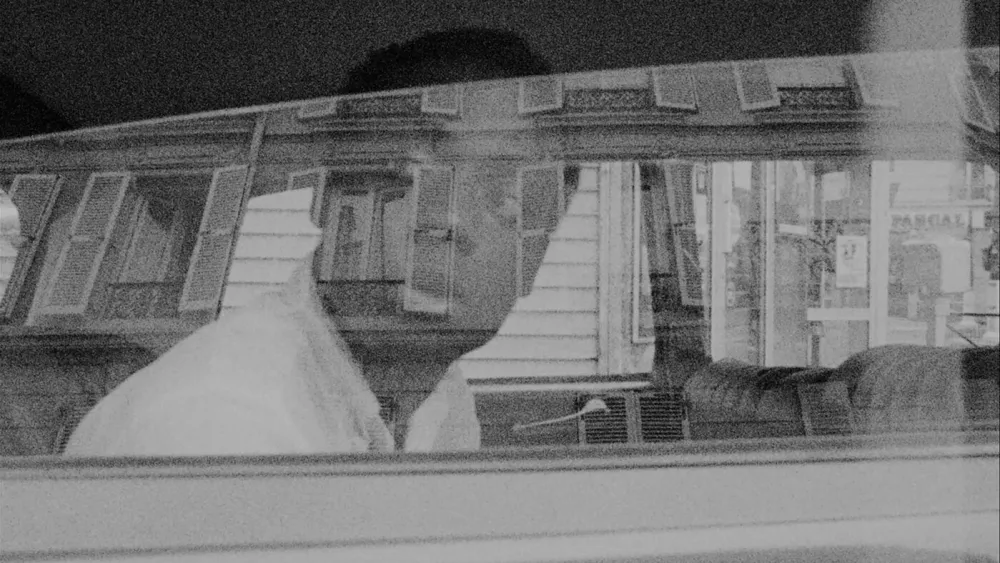
Finally granted a U.S. release nearly two years after its Telluride world premiere, this 68-minute work occupies no clear lane. Though it’s ostensibly a narrative feature, following a version of Baldwin played by actor Benny O. Arthur through restless travels in Turkey and France, it’s light on story — and, until mere minutes before its close, shorn of dialogue — but heavy on circling mood. Owens shoots in monochrome on a Bolex 16mm camera, making no attempt to disguise the present-day backdrop to his subject’s midcentury wanderings, which occasionally lends “Jimmy” the sense of a cinematic walking tour, chasing the spirit of Baldwin rather than attempting to embody him outright. Given the candid, diaristic nature of its construction and presentation, it could equally be viewed as a nonfiction record of Owens and Arthur’s creative collaboration.
For the first ten minutes or so, Baldwin is an invisible protagonist in “Jimmy,” as Owens’ roving camera assumes his gaze: We’re immersed directly into the chattering streets and dusty rural paths of Istanbul, where the author traveled repeatedly in the 1960s, and observe as he did its teeming density of life, both human and animal. Owens’ own photographic eye for storied faces and charged urban tableaux ensures this doesn’t feel like mere travelogue, as do the jittery, changeable bebop rhythms of Paco Andreo’s marvelous jazz score; a keen individual perspective emerges despite no accompanying narration or characterization.
It’s only after this enigmatic Turkish prologue, when Baldwin relocates to Paris, that he becomes a physical presence in the film — with Arthur’s resemblance to the author assisted by the bleached-out, ink-blotted graininess of Owens’ lensing. Usually clad in high-waisted, cinch-backed khakis that impose a hint of period authenticity on these otherwise 21st-century images, the actor’s predominantly wordless performance gives Baldwin a quick, alert but inquisitive stride, a lone-wolf body language that owns its independent status, but sometimes projects a hungry, willing sexuality: We glimpse his flirtations with other men, fellow outsiders in the city’s Algerian quarter. And sometimes he merges entirely with the fabric of the city, shown only as a shadow or a translucent reflection on the scenery.
Even at a little over an hour, “Jimmy” risks stretching its impressionistic conceit: Compared to, say, Raoul Peck’s rigorous, textually engaged Baldwin documentary “I Am Not Your Negro,” it’s a film that doesn’t aim to say much about Baldwin, but to feel and channel his general aura. Yet there is an arc to its jagged rambling, as he gradually finds not just his feet in Paris, but his voice too: He begins to write, as Andreo’s hitherto ceaselessly cascading score pauses for the amplified scritch of pencil on paper.
Finally, in a film that mostly conjures the author’s mind and spirit without recourse to his words, “Jimmy” eventually lets him speak: Arthur reads crisply from Baldwin’s 1972 book “No Name in the Street,” verbalizing the anger, isolation and unrest that Owens has otherwise suggested in sensory terms. The specifics are needed, as Baldwin’s words bring bracing, embittered context to the film’s lustrous European tour. “My history in the West had, for its daily effect, placed me in such mortal danger that I had fled, all the way around the corner, to France,” he says. “Jimmy,” for all its beauty and curiosity, depicts not a great escape, but a renewed confrontation with the othering and alienation that Baldwin faced back home.
Read more Phil Collins Says He Almost Died in 2024 From Alcohol Abuse: ‘People Were Coming to Say Goodbye’
‘Jimmy’ Review: Woozily Seductive Mood Piece Wanders Europe in Pursuit of James Baldwin’s Spirit
Reviewed online, July 31, 2026. (In Telluride, New York festivals.) Running time: 68 MIN.
-
Production:
A Strand Releasing presentation. Producers: Yashaddai Owens, Ava Woo Kaufman. -
Crew:
Director, writer, camera, editor: Yashaddai Owens. Music: Paco Andreo. -
With:
Benny O. Arthur.