
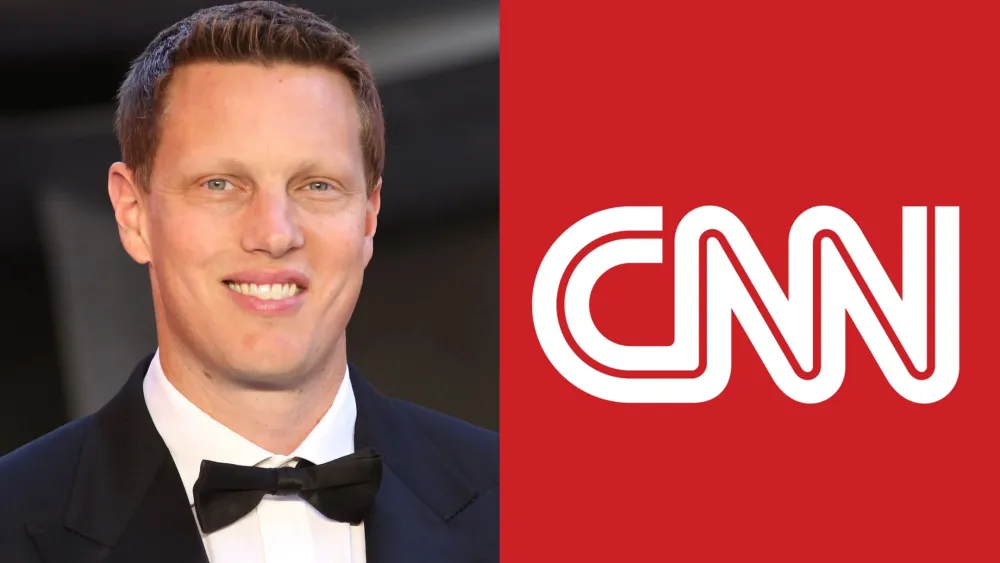
Paramount CEO David Ellison said he believes the antitrust litigation filed by 12 states and the Writers Guild of America isn’t about market share but about “whether I can be trusted as a steward of Warner’s CNN.”
Read more ‘Spider-Man: Brand New Day’ Dominates U.K. and Ireland Box Office With Massive Launch
Ellison, in an op-ed published by the New York Times Tuesday, noted, “There has been speculation about my politics, my loyalties, my intentions.” He reiterated his pledge that CNN would remain independent under a merged Paramount-Warner Bros. Discovery and that its journalists “will continue to answer to the facts and to all the people they serve — not to any party or cause.”
“Unfortunately, I can’t give anyone a view into my heart and mind, but I can share this: I have regularly voted for candidates of both parties; I hold some views that would be called conservative and others that would be called liberal, just like most Americans; and when it comes to our news operations, I do not aspire to lead these companies to bend their newsrooms to my views. I believe that news should be based on facts and truth,” Ellison wrote.
The Paramount chief continued, “Great news organizations like CNN and CBS News are here to tell it straight down the middle. That requires newsrooms that reflect the whole world, not one side of it. And it requires independence. Our journalists will continue to answer to the facts and to all the people they serve — not to any party or cause. These were founding principles for both CNN and CBS News, for legends like Ted Turner and Edward R. Murrow, and it is exactly that kind of independence that has always fueled the greatness of ’60 Minutes.’”
Ellison said he has not heretofore publicly weighed in on the litigation aimed at blocking the Paramount-WBD merger because “I believe that anyone who oversees a news organization — I am chief executive of Paramount, which owns CBS — shouldn’t put a finger on the scale, especially on matters involving his own company.” So “when California’s attorney general, 11 other state attorneys general and, a day later, the Writers Guild of America sued to stop the deal, I stayed quiet. I quickly learned such restraint has costs. While I was silent, others were happy to write my story for me. No more.”
In the new business, Ellison wrote, “There is much ground to recover.” He cited the latest polling from Gallup that found 28% percent of Americans “trust the news — the lowest ever recorded.”
“The temptation is to say the problem lies elsewhere. Our obligation is to look inward and say: We can do better. We are in a moment when Americans trust few institutions, but journalists haven’t always helped their case by refusing to engage with critiques,” Ellison wrote.
Ellison had hoped to have closed Paramount’s $111 billion takeover of Warner Bros. Discovery by now. Instead, he’s facing a protracted legal fight that threatens to push the consummation of the merger into 2027 — or derail it altogether. The 12-state coalition alleges a combined Paramount-Warner Bros. will unlawfully reduce competition in the basic cable and theatrical distribution markets. The WGA’s lawsuit argues that it will also harm the marketplace for writers.
Last Friday, Paramount Skydance asked a judge to schedule its upcoming antitrust trial beginning Nov. 4, 2026, while the states and the WGA asked for the trial to commence April 5, 2027. The parties are awaiting the judge’s ruling on the trial date.
There’s been speculation that the states might drop their suit if Paramount agreed to spin off CNN. But California attorney general Rob Bonta, who is leading the state AGs’ lawsuit to block the merger, has denied this. “Spinning off one channel from a media conglomerate is not a sufficient remedy to protect consumers and preserve competition in the film and television industry,” Bonta said in a July 15 post on X.
Read more Spotify Notches 300 Million Premium Subscribers
Separately, last month a Paramount shareholder sued David Ellison and his tech billionaire father Larry Ellison, alleging they cut an “illegal” deal with President Donald Trump to secure U.S. governmental approval for the takeover of Warner Bros. Discovery. In return, according to the lawsuit, the Ellisons offered “the opportunity to improperly funnel cash” to the president by settling his legal claims against CNN, and they allegedly promised that CNN anchors whom Trump does not like would be fired after the WBD takeover. In response, a Paramount spokesperson said in part, “This lawsuit recycles allegations that have already been reported and already addressed. As we’ve said consistently: no commitments from either David or Larry Ellison have been made to any government body, State AG, or federal agency regarding the future of CNN or any other news property, other than the goal to deliver truth-based journalism.”
Ellison, in the NYT op-ed, said the lawsuits filed by the states and the WGA “imagine a Hollywood that no longer exists — an industry ruled by a handful of legacy studios.”
Echoing points Paramount has made previously, Ellison said that if you add up every hour Americans spend watching TV, a combined Paramount-Warner would account for less than 20% of all watch time — “competing every day against Netflix, Amazon, Apple, which are all companies whose resources dwarf ours.” If you add in viewing of YouTube’s user-generated content, Paramount-WBD’s share would be around 13%. He said a combined Paramount-Warner Bros. would account for just 18% of the domestic box office over the past 12 months and only 22% on average over the past two years. “Those are not the numbers of a company that can dictate what audiences watch or what writers get paid,” Ellison wrote.
That’s why “I believe this fight is not really about market share,” but about control of CNN, Ellison said. If it were about Paramount-WBD’s market power, he argued, “it wouldn’t have been reviewed or approved by regulators reflecting 65 countries, including the United States, the European Union and China.”
A combined Paramount-Warner Bros., Ellison wrote, will reinvigorate the entertainment industry. “Hollywood is losing ground to technology platforms whose algorithms reward the loudest voices. The work is leaving, especially from California — where I grew up and where I’m raising my family — draining the deepest pool of creative talent ever assembled,” he wrote in the Times op-end.
Ellison also called out “commitments we have made for the proposed Paramount-Warner,” to release 30 theatrical films a year; 170 television series annually, “for our own platforms and for our competitors’”; and more than $30 billion in annual content investment.
“I understand that promises from an executive in the middle of a merger invite skepticism. So judge us by the year we just had,” the exec wrote. “Since I took over Paramount, we have nearly doubled our theatrical slate from eight films last year to 15 and greenlit 40 new or returning series for Paramount+, our streaming service. You can expect 90 series from our television studios in 2026. We raised our content investment by $1.5 billion. We did that before the deal was signed and any lawsuit was filed, because making more is the whole point of the company we are building.”
Ellison concluded his op-end with this: “Hollywood’s story can have a happy ending only when we connect with our audience. It’s the audience — the American people — who have the final say in whether a movie succeeds or fails, whether a news organization thrives or withers and therefore whether our industry succeeds or fails. I want to build a company with the strength and resources to deliver for those audiences who turn to us, for the storytellers who rely on us and for the country that dreamed this all up.”