
When Eli Roth was making “Borderlands,” a $120 million adaptation of a popular video game, he felt the movie getting farther and farther away from his punk rock vision.
Read more Hollywood’s New Leaders: Class of 2026
“As things grow bigger, studios just naturally become more risk averse,” Roth says. “My nature as a filmmaker is to do the thing that’s left of center, because that’s what has worked for me.”
But to earn a PG-13 rating, studio executives pushed for cuts and tweaks, and the finished product was a disaster, bombing with audiences and critics when it opened in 2024.
“You got something that belonged to nobody,” Roth says. “It’s not a kids’ movie, but it’s trying to appeal to everybody. It’s for gamers, but it doesn’t have the violence the gamers want because it can’t be that extreme because it costs too much. You just wind up with a movie that’s neither fish nor fowl.”
That’s not the case with “Ice Cream Man,” which — love it or hate it — is unabashedly Roth’s vision. The director, who made a name for himself directing gorefests like “Hostel” and “The Green Inferno,” is returning to his ultraviolent roots with the story of children who become homicidal maniacs when they devour frozen treats.
“I thought, what if it’s like the Pied Piper, and the ice cream truck music triggers a Pavlovian response?” Roth says. “I had this image of the kids killing their parents and teachers and then eating more and more ice cream.”
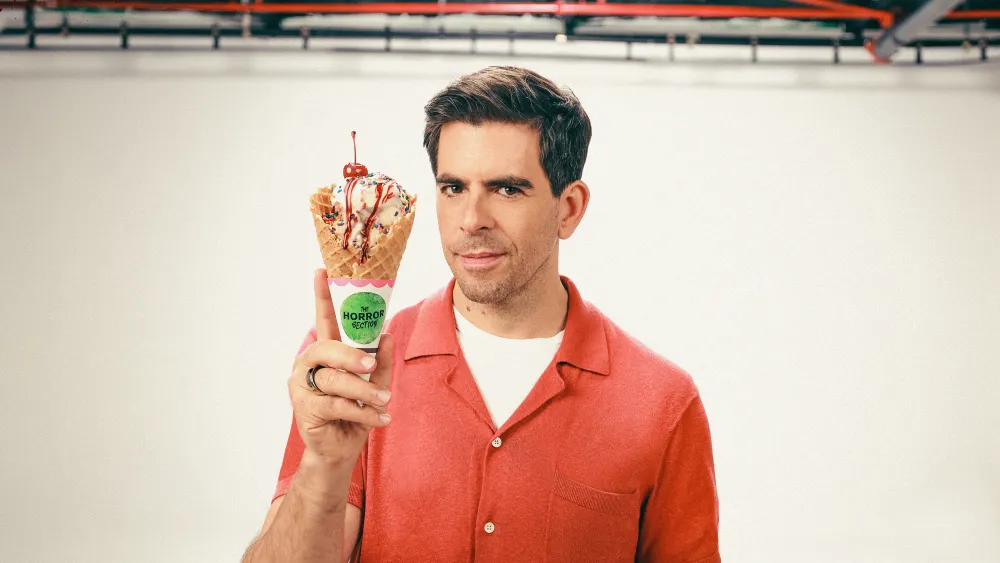
And this time Roth won’t be pressured to tone down the carnage. He’s cut out the studio entirely and gone into business for himself. Roth raised the film’s $5.5 million budget mostly through foreign pre-sales and tax credits (it shot in Canada). He will release the picture via The Horror Section, the independent genre company that Roth founded in 2025. The plan is to distribute two to four horror films annually in theaters, keeping budgets low to preserve creative freedom. After “Ice Cream Man” opens on Aug. 7, The Horror Section will release “Stiletto,” a slasher film set in strip clubs, in the fall and go into production on “Don’t Go in That House, Bitch!,” a horror film that will team Roth with Snoop Dogg. All of them will get theatrical releases of roughly 45 days.
For “Ice Cream Man,” Roth expects to spend a few million dollars on marketing. That’s a fraction of what studios typically shell out to promote films. The production will rely primarily on cheaper digital ads and stunts such as having Roth show up at Comic-Con to hand out sweet delights from a blood-spattered ice cream truck. If the movie makes between $6 million and $8 million theatrically, Roth estimates it will be profitable because it will earn roughly the same amount on home entertainment.
Read more ‘This Summer Will Be Different’ Netflix Series Adds 6 to Cast as Production Begins
“We have set the film up so that the floor is very high,” says Jon Schnaars, The Horror Section’s CEO. “It really does not need to do a lot domestically for us to be well positioned as a company.”
More importantly, Roth gets to control the stories he spins in perpetuity, instead of selling a script and its underlying IP to a studio for a one-time fee.
“Novelists who write stories own the underlying rights, but filmmakers who write a screenplay don’t own the underlying rights, and that always felt like an imbalance to me,” Roth says. “Stephen King owns all of his creations. Why should I create something and then give away ownership?”
That’s become increasingly important as the economics of moviemaking have shifted in the Netflix era.
“Decades ago, the studio owning the movie was fine because there was so much money to be made on home video, and we were all doing great,” Roth says. “DVD was explosive, and then you would get residuals when it went to cable TV. But as the streamers came in, all of a sudden, the residuals were gone. When a movie goes on Netflix, you’re not getting any money.”
“Ice Cream Man” will be released without a rating, sparing it from battles with the ratings board over scenes of preteens vivisecting and decapitating grown-ups. That’s a freedom Roth fought for and frequently lost throughout his career.
“Part of horror is you’re being distasteful,” Roth says. “And for people in studios, it’s hard to be distasteful because they’re making stuff that they want to be celebrated and socially acceptable. And part of what you’re doing by making a good horror movie is you’re being transgressive and you’re pushing the boundaries.”