
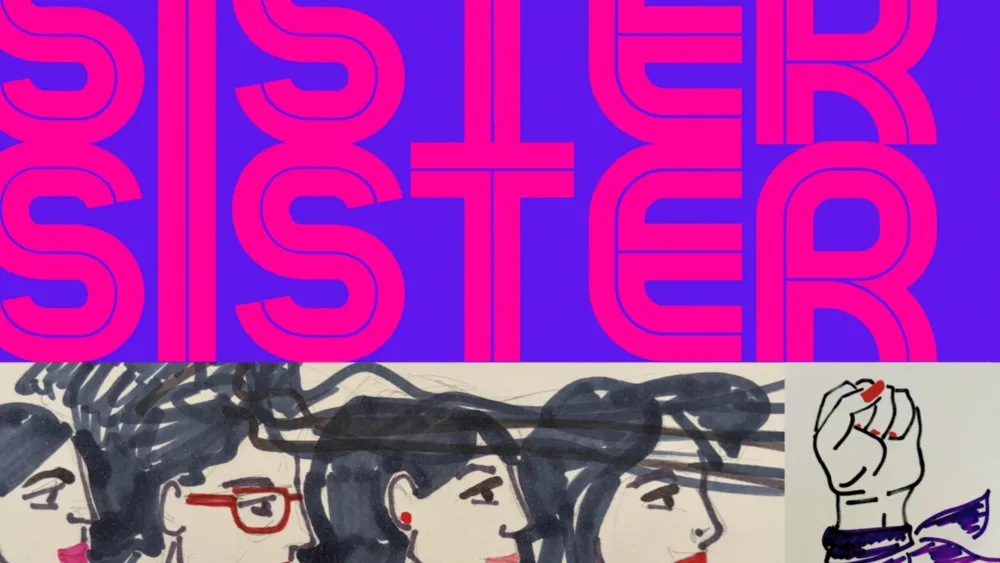
North Macedonia’s Teona Mitevska (“Mother”) and French director Céline Sciamma (“Portrait of a Lady on Fire”) are among the filmmakers who will launch an initiative at the Sarajevo Film Festival that looks to reshape the role of women in the film and TV industries with a “bold, punk and revolutionary” vision of an inclusive and sustainable screen sector.
Read more Peter Chan’s Toronto-Bound ‘The Road Not Taken’ Boards Moebius Entertainment for International Sales
Dubbed Sister Sister, the initiative aims to foster sisterhood and togetherness with women working across professions and disciplines in film and television. It will include a think tank at this year’s Sarajevo festival bringing together female filmmakers, producers, writers and academics from the former Yugoslavia to explore the future of women’s authorship in the region’s cinema.
The event will include three moderated roundtables in which participants identify key challenges, share experiences and formulate concrete recommendations for how to create, in the organizers’ words, “a more inclusive, courageous and sustainable audiovisual industry.”
The goal, says Mitevska, is to collectively draw up a manifesto “that addresses all of our concerns and ideals — something bold, punk and revolutionary.”
“This is a gathering about strength, joyful hunger and revolutionary anger of taking the space deserved,” says Mitevska. “And finally translating ideas into impact, as we explore the expanding influence of women worldwide as they reinvent the art of cinema, upend old rules and harness the power of this critical moment to shape a new way forward.”
Born in Skopje, Mitevska is one of the most prominent female filmmakers working in Southeast Europe today. Her latest feature, “Mother,” starring Noomi Rapace as a young Mother Theresa, opened the Horizons sidebar at the Venice Film Festival last year.
It was after that film’s North Macedonian premiere last fall, at the Manaki Brothers Film Festival, where the director fell into conversation with Sarajevo programmer Asja Krsmanović and Sister Sister was first conceived.
“I told her of being tired of being defined by others, and of the incredible moment I find myself in life: a moment where finally I have the confidence and the audacity to define myself by myself entirely, without the pressure of being anything else than what I truly am,” Mitevska recalls. “Turning 50 had given me the confidence of an 18-year-old Xavier Dolan — a beautiful realization, yet with a dose of sadness within.”
Several months later, the duo expanded on that initial chat, and the formal trappings of Sister Sister began to take shape. Mitevska then reached out to Sciamma, who she met at the Venice Film Festival in 2023, where their respective films, “21 Days Until the End of the World” and “This Is How a Child Becomes a Poet,” screened together as a double bill in the Venice Days program.
“Céline’s unapologetic tone and quest for a new feminist grammar in cinema made her the evident choice as someone to kick off Sister Sister,” Mitevska says. To her delight, the French filmmaker enthusiastically threw her support behind the initiative.
The duo will take part in a conversation during Sarajevo’s CineLink industry strand titled “Are We Radical Enough? Reclaiming and Redefining Women’s Authorship in European Cinema.” Moderated by Mitevska, the panel will include Sciamma; Serbian director Jelena Maksimović, whose feature debut “Until the Day Ends” will premiere in the Venice Film Festival’s Horizons strand; and Kosovo-born director Blerta Basholli, whose debut “Hive” won the Grand Jury Prize at Sundance in 2021, and whose latest, “Dua,” premiered at Cannes Critics’ Week this year and will compete in Sarajevo.
The conversation, which takes place on Aug. 20 at 1 p.m. in Sarajevo’s Festival Garden, will explore how women filmmakers negotiate authorship within societies still shaped by patriarchal structures, political instability, contested histories and inherited cultural narratives.
Taking stock of the gains made by women filmmakers in Europe over the past decade, it will examine lingering questions over who has the power to shape narratives, whose perspectives continue to be marginalized and what it means to be a radical female author today.
Meanwhile, the Sarajevo think tank will culminate with the creation of a manifesto that proposes actionable principles for strengthening creative freedom, equal opportunity and inclusive leadership across the regional screen industries, while generating practical recommendations and long-term commitments that can inspire policy, industry practice, funding strategies and future collaboration.
The goal, says Mitevska, is to explore “the possibility of creating a safe space for myself and others alike where we can define ourselves by ourselves entirely — a bold and fearless zone of not giving a damn.”
The Sarajevo Film Festival runs Aug. 14 – 21.