
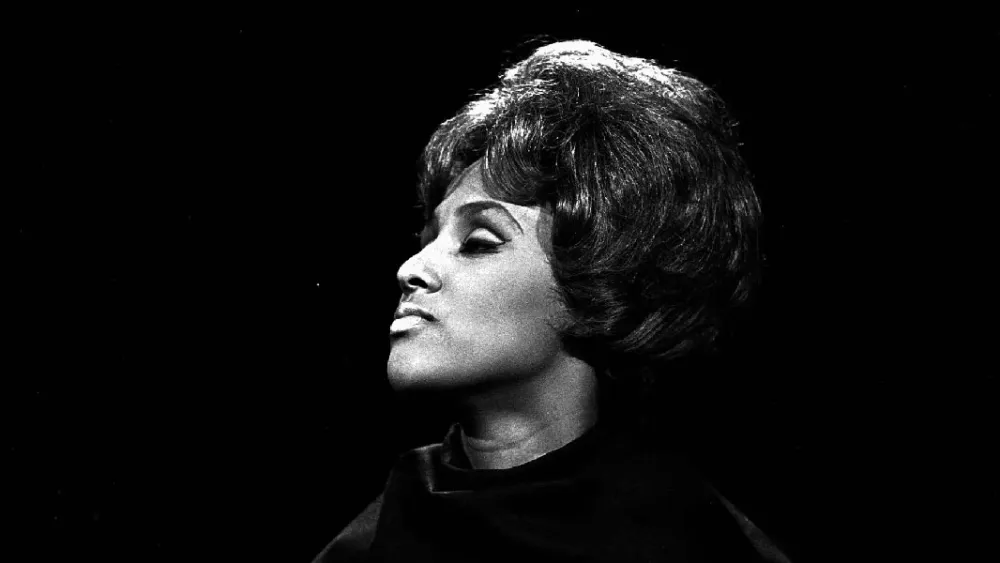
“Darlene Love: I Know Where I’ve Been” is a documentary about one of the greatest singers in the history of pop music, but it’s also a stunning meditation on the issue of identity in pop. Darlene Love recorded her most defining songs in the early ’60s, when she was part of the Phil Spector hit factory. She led a group called the Blossoms, who Spector recruited, in 1962, to sing “He’s a Rebel,” the track that became the prototype for the Wall of Sound. The song was supposed to have been sung by the Crystals, but they were 3,000 miles away in New York, and Spector, eager to rush the song into production, figured it didn’t matter — he could just credit the Crystals (which he did), and no one would know.
Read more NFL on Sling TV 2026: Here’s How to Watch Minnesota Vikings vs. Chicago Bears Game Live Online
Darlene Love sings “He’s a Rebel” with a saucy majesty that builds in power, until it becomes almost lordly in its reverence-for-the-bad-boy. (It’s no accident that Kenneth Anger, in “Scorpio Rising,” transposed the song so that she was singing about Jesus.) Her voice is as big as the Wall of Sound she helped to create. She sang lead on another Crystals track, “He’s Sure the Boy I Love,” did the background vocals on many other Spector songs — and, in 1963, sang “Christmas (Baby Please Come Home),” the greatest pop-music Christmas song ever recorded. She was credited on that one, but “The Phil Spector Christmas Album” had the misfortune to be released on Nov. 22, 1963, the day JFK was shot. The record fizzled; after a few weeks, Spector suppressed any further distribution of it. The album was essentially lost (until it was reissued by Apple Records in 1972). So even though Darlene Love had been billed on the album’s greatest track, her name remained lost as well.
Thirteen years ago, Morgan Neville’s documentary “20 Feet from Stardom” paid tribute to rock ‘n’ roll’s most fabled back-up singers (the majority of whom were Black), and to how they spent their careers standing in the shadows. Darlene Love was one of those singers, and she featured prominently in the film; when it won the Oscar for best documentary, it was Love who stood up at the Academy Awards and gave an indelible speech. “20 Feet from Stardom” captured a very particular situation: The artists it was about didn’t get to be stars, but the movie suggested that in an alternate universe they might have been.
Darlene Love, however, has lived a special, heightened version of that conundrum. She hovered in the background, not getting the recognition she deserved. At the same time, she was a star. Not a maximal one, but if being a true pop singer means singing lead on some of the most magical recordings of the 20th century, Love did that. She was out there in front, spearheading the sound. It was her name that was erased, so in a strange way her identity got erased too. You knew that voice in your sonic bones, but it was in front of you and invisible at the same time.
Darlene Love didn’t need an alternate universe (she lived in both universes), and “Darlene Love: I Know Where I’ve Been” tracks the unique fusion of glory, injustice, fleeting opportunity, dashed dreams, resilience, and latter-day recognition that defines her story. The movie, like Love’s life and career, is a one-of-a-kind ride, and by the end you don’t just feel like you know and understand this remarkable artist. You feel closer to the center of the mysteries of pop.
Love is 85 now, but in the documentary, which is built around a present-day interview with her (though there’s also a ton of great archival footage), she’s ageless. Under a wig of orange-blonde curls, her face beams, her smile dances, her laugh rings out, her personality is funky and vivid, and she simply doesn’t seem old. Love got to know Paul Shaffer when David Letterman fell in love with “Christmas (Baby Please Don’t Come)” and decided, in 1986, to feature Love singing it on his late-night show (a performance that became an annual ritual). The documentary presents Love along with Shaffer and his band in a studio of the Power Station, where she performs updated renditions of several of her key songs. Her voice is extraordinary, the force and quality of it undimmed. And Love proves a great narrator of her own legend. She knows what she was robbed of (not just credit but the life she could have had), yet she has transcended bitterness.
The film’s director, Barry Avrich, takes us back to the age of radio (he pays nifty homage to it in the opening credits), when you would hear a voice coming out of that box, and the voice took hold of you. Love, born Darlene Wright in 1941, shuttled between Los Angeles and Texas and spent her first 15 years in church, dunked in gospel as much as Aretha or Ray Charles were. She joined the Blossoms in the late ’50s, and they sang backup on a host of classics, starting with Sam Cooke’s “Everybody Likes to Cha Cha Cha” and then on “Chain Gang” and “Rockin’ Robin,” “Monster Mash” and “Johnny Angel.”
Read more Paramount and California AG Bonta Reportedly in ‘Advanced Talks’ to Settle Antitrust Suit
From there, they moved on to Phil Spector. They worked for him as back-up singers, in addition to being swapped in for the Crystals and Bob B. Soxx and the Blue Jeans, for whom Love sang lead on the sublimely lilting “Why Do Lovers Break Each Other’s Hearts.” Spector was a holy terror even then (though he was also a genius), and the name game he played with his female soul singers, moving them around as if they were interchangeable game-board pieces, was designed to do several things at once. It made Spector himself the star. (He was the first producer to do that.) It enabled him to withhold royalties. And in the largest sense, it was his (racist) way of treating all his talent like indentured servants.
Love became a magnetic presence on “Shindig!,” the great rock ‘n’ roll TV show that allowed its performers to be wild and woolly (Shaffer offers a great reminiscence of it). She led the Blossoms in back-up vocals on pop songs from “Monday, Monday” to the Beach Boys’ “In My Room,” and she went on tour with the other Spector singers, falling into a serious relationship with Bill Medley of the Righteous Brothers. Onstage, she had a toothy insolence.
Her career was a string of missed opportunities, including one that sounds like a conspiracy theory, though as presented in “I Know Where I’ve Been” it’s a fascinating one. Love was originally set to record “River Deep, Mountain High” for Phil Spector. At the last minute, he changed the singer to Tina Turner — and the song was, of course, a legendary commercial flop, the one that effectively ended Spector’s reign. The theory presented is that Turner’s rendition of it had too much R&B grit to succeed on the pop charts of 1966. Whereas Love, who had a much smoother pop-soul croon, would have made it a hit. Ah, the seduction of alternate-universe thinking! The documentary reveals how Spector became a creepier presence with the years and continued to shadow her, at one point buying out a contract she had with someone else. There’s no doubt that Spector’s great songs made her career, but the way he designed it they also nipped it in the bud.
Love was still singing in the early ’70s (we hear her do a spellbinding rendition of “I’ll Be There”), but as the age of peak R&B wound down, so did her opportunities. She was married several times and had four children, two of whom got involved in the L.A. gang-banger scene and wound up in prison. (They have since emerged and triumphed.) Love wound up cleaning houses. Yet she was not forgotten. Bruce Springsteen and Steven Van Zandt, both fans from way back, took an interest in her (they are interviewed extensively). She wound up reviving her career by doing nostalgia-act performances on cruise ships. This ultimately led to the 1984 jukebox musical revue “Leader of the Pack,” which she was featured in as it began performances in the Greenwich Village club the Bottom Line; it became a sensation. The documentary hints that it was also successful when it moved to Broadway (which isn’t the case; it flamed out there), but Darlene Love was relaunched.
And as much as that, she was recognized. The exultant Letterman performances of “Christmas (Baby Please Come Home),” featuring bigger choirs each year, helped a great deal, and so did her 2011 induction into the Rock ‘n’ Roll Hall of Fame. Suddenly, everyone knew who Darlene Love was. “I Know Where I’ve Been” completes the journey. It’s a film that leaves you staggered — at the soul-stirring splendor of her voice, at the forces of the time, both big and small, that marginalized her, and at our awareness of what might have been, which should never stand in the way of our awe at what was.
‘Darlene Love: I Know Where I’ve Been’ Review: A Stirring Pop Doc Traces How the Great Singer of ‘He’s a Rebel’ and Other Classics Reclaimed Her Name
Reviewed at Toronto Film Festival (TIFF DOcs), Sept. 14, 2026. Running time: 115 MIN.
-
Production:
A Melbar Entertainment, TPH Entertainment production. Producers: Taraji P. Henson, Barry Avrich, Mark Selby. Executive producers: Jamila Jordan-Theus, Len Evans, Tim Drake, Randy Lennox, Jeffrey Latimer. -
Crew:
Director, screenplay: Barry Avrich. Camera: Ken Ng. Editor: Dave Kennedy. -
With:
Darlene Love, Bruce Springsteen, Cher, Dionne Warwick, David Letterman, Steven Van Zandt, Nancy Sinatra, Paul Shaffer, Lou Adler, Marc Shaiman, Robert Smigel, Jimmy Fallon.