
It’s a total coincidence that Ken Burns and David Schmidt’s six-part documentary series “The American Revolution” was released by PBS in November 2025, less than a year ahead of the United States’ 250th anniversary.
Read more Sony’s Santa Monica Studio Announces ‘God of War Laufey’ (Gaming News Roundup)
“That wasn’t even on anyone’s horizon,” said Burns while talking with Variety’s Senior Artisans Editor Jazz Tangcay. “I didn’t realize then that it would be a 10-year labor, that we would explode all of the preconceptions that we have and that we would come out as we did.”
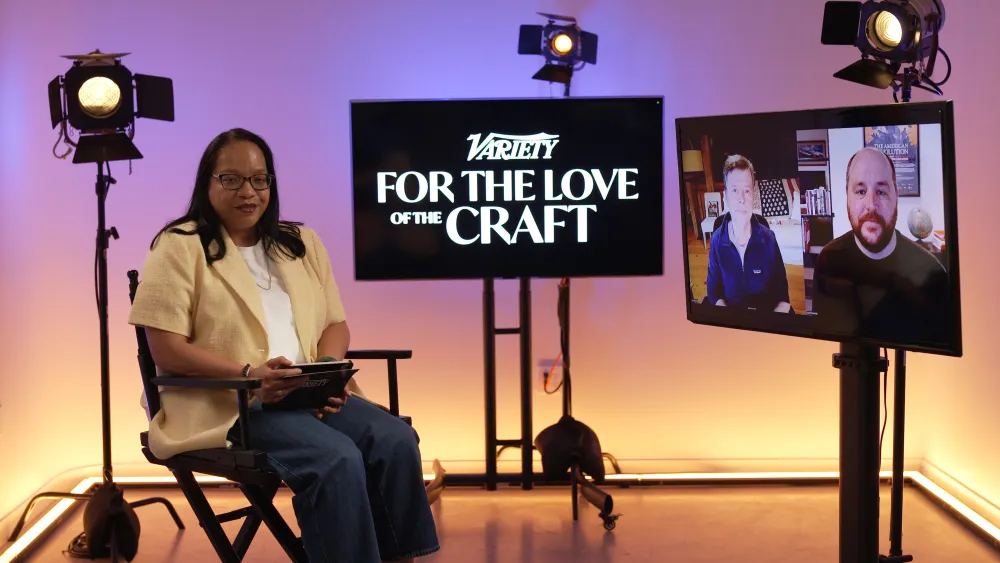
Burns and Schmidt, who produced and co-directed the series, joined Tangcay to discuss the decade-long journey of creating the PBS series for Variety’s For the Love of the Craft, diving into how the team assembled a team of expert researchers, recruited an all-star cast of actors and why they decided to tackle the “very complex narrative of the most consequential revolution in history.”
Looking back, Burns is surprised they completed the series given just how comprehensive they needed to be.
A key challenge for the filmmakers was the absence of photographs or newsreels, which required them to “recalibrate a good deal of how we approach the production of such a big mammoth story and to rely more on reenactments, not to reenact a particular battle, but to collect a critical mass of imagery that we treat in a more impressionistic way,” said Burns.
To accomplish such a feat, they recruited a cast of some of “the greatest actors on the world,” whom Burns called the project’s “secret weapons.” “I think this documentary has the greatest cast list of any film or television series that’s ever been made,” he said. “We had to not just try to tell the mythology again, but to make dimensional those boldfaced names like George Washington. They’re not just statues. If you make them real, then then they are examples that we can try to be like.”
Read more AI Music Company Suno Raises $400 Million at $5.4 Billion Valuation
To find the right historians, the team did research to identify scholars of Native America history, the British empire and more. “In the end, I think it’s 18 scholars that we interviewed and 24 that we used, and that includes writers and popular historians of the period,” said Burns.
“There was a joy in making this film and a feeling of collaboration with basically everybody, including, the 150+ characters that we use and their voiceover in the film,” said Schmidt. “They committed their truth to paper and and to memory, and we’re working with that, but we’re also working with the archivists who preserved that.”
The series incorporates the often overlooked stories of African Americans and Native Americans. “The American Revolution” lends a voice to how they worked in military units. It also examines the crucial role of women. Schmidt said, “It’s really just restoring them to the position of primacy that they offered in the time” He added, “This is a revolution that took many more people than the 55 white men in Philadelphia whose names we might know and whose images we might recognize from. There were millions of people affected by this war.”
And though the documentary’s coordination with the country’s anniversary was coincidental, it’s an extremely timely moment to watch the series.
“Mark Twain is famously supposed to have said, ‘History doesn’t repeat itself, but it rhymes,’” said Burns. “In every film we’ve made, there have been lots of rhymes. It’s been pretty spectacular, the way in which the story of the American Revolution and the beginnings of the notions of liberty, of freedom and of citizenship are all now at the forefront as we discuss it.”