
The “NO FAKES” Act of 2026 (“Nurture Originals, Foster Art, and Keep Entertainment Safe”) would establish an intellectual property right by which individuals could authorize or block digital replicas of their voice and likeness. The Senate Judiciary Committee is scheduled to vote on whether to advance the bill today — June 18, 2026.
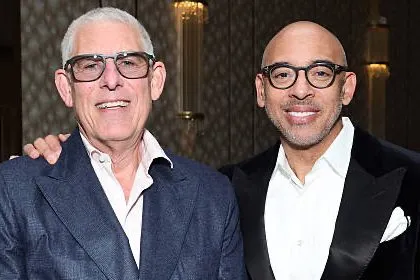
In the guest post below, Lyor Cohen, YouTube’s global head of music (and formerly a top executive at Warner Music, Def Jam Records and Rush Management), and Harvey Mason Jr., CEO of the Recording Academy (and a veteran musician, songwriter and producer), make their case for the bill’s importance. The pair spoke on the subject at a Grammys on the Hill event in April.
Variety welcomes responsible commentary — contact [email protected] if interested.
Between us, we’ve spent the better part of six decades fighting for artists. One from inside the industry’s biggest stages — Def Jam, YouTube — and one who went from the recording studio to the helm of music’s highest institution. We’re not always certain on where the industry is going, but on this, there’s no debate: Artists have to win or nothing works.
Artificial intelligence is putting that principle to the test.
Change is inevitable, the music industry has never let us forget it. With change comes unintended consequences. But how you respond defines your convictions — and right now, it could define the trajectory of the industry, and artists’ seat at the table.
We’ve been here before. When digital distribution reshaped the economics of recorded music, the instinct was to sue and litigate. Some of that was necessary. But the thing that actually rebuilt the ecosystem was infrastructure and partnership, the kind that created opportunities for artists in the new economy.
YouTube was inside that chaos. The same platform that now reaches 2 billion people a month was once a destination for unauthorized music. The answer was infrastructure. Artists and rightsholders got a suite of tools to control their work; a dashboard that turned every unauthorized use into a decision only they could make: what stays up, what comes down, and how their work could actually pay the bills. That’s the model for what comes next. Not just a legal right, but the infrastructure to exercise it.
The AI tools emerging across the industry are powerful — and in the right hands, genuinely expanding what’s possible. A bedroom producer in Lagos now has access to capabilities that would have required a major-label budget a few years ago. When artists are in control of these tools, the results compound.
But there’s something else worth protecting, something harder to quantify than a catalog or a royalty stream. An artist’s voice. Their identity. The thing that took a lifetime to build.
In April 2023, a song called “Heart on My Sleeve” started circulating online. It sounded exactly like Drake and the Weeknd — the cadence, the tone, the texture of their voices. Millions streamed it. It was a parlor trick that became a proof of concept for an identity heist. Neither artist was asked. Neither was credited.
Read more How ‘KPop Demon Hunters’ Spent an Entire Year as a Blockbuster for Netflix (EXCLUSIVE)
That moment landed differently for both of us. Not because the song was good or bad, but because nobody had a clean answer for what had actually happened, or what rule had been broken. And that’s the point. This wasn’t exactly a traditional copyright situation. Drake and the Weeknd hadn’t made a song that someone copied. They hadn’t made anything. What was taken wasn’t a work. It was them: their voices, their identities, the instruments they’d spent their whole lives developing.
Copyright law has always been about works. Things you make. The logic is intuitive: you created it, you own it, you decide what happens to it. But your voice isn’t a work. It is not copyrightable. Your face isn’t a sample.
When AI can replicate either — convincingly, instantly, at scale — the question isn’t just who profits. It’s also who decides. Right now, the answer depends on what state you live in. A patchwork of state right-of-publicity laws wasn’t built for this, and it isn’t equal. There is no federal standard.
That was two years ago. The tools are now faster, cheaper, and more convincing than they were even six months ago. Yet the rules remain stuck in the past. Every month without a federal standard is a month the industry normalizes a culture we will spend decades trying to walk back.
That’s the gap this moment requires us to close.
The NO FAKES Act — a federal right to control AI replicas of your voice and likeness — is the legal foundation this moment requires. This week, the Senate votes on whether to move it forward. Congress should seize the moment, and show that it’s possible to drive innovation forward while putting common sense protections in place.
This legal protection is necessary, but it’s just the first step. The law alone doesn’t build industries. The question isn’t just whether artists are protected, but whether they trust the ecosystem enough to build in it. When they do, everyone benefits. When they don’t, the tools get used around them instead of with them.
That’s why the infrastructure has to be universal. YouTube has built likeness detection technology that automatically identifies when an artist’s likeness is being used without permission. But an artist protected on one platform is still vulnerable on another. Every platform where fans can upload content needs to meet the same high bar — not just because the law might eventually demand it, but because the alternative is an ecosystem artists will eventually abandon.
These aren’t roadblocks for innovation. They’re the conditions that make innovation worth something. The technology is here. The only question left is are we going to protect the creators.
Read more JioHotstar Sees AI, Connected TV and Commerce Driving India’s Next Streaming Phase
Your voice, your rules. That’s the principle. Everything else follows.