
SPOILER ALERT: This interview contains spoilers forSeason 5 of “The Bear,” now streaming on Hulu.
The fifth and final season of “The Bear” dropped 12 hours ago on Hulu, and Lionel Boyce is meandering around Paris waiting for the reactions to roll in.
“No one is awake yet,” he says, noting the time difference from Los Angeles. “I’m just walking around sweating, because it’s insanely hot out here — and they’re not big on air conditioning.”
Boyce, who’s played the soft-spoken pastry chef Marcus, is eager for viewers to devour the FX kitchen dramedy’s final course. “Endings are hard,” he tells Variety. “Nobody likes saying goodbye, and it’s hard to satisfy someone enough to make them forget about their expectations.”
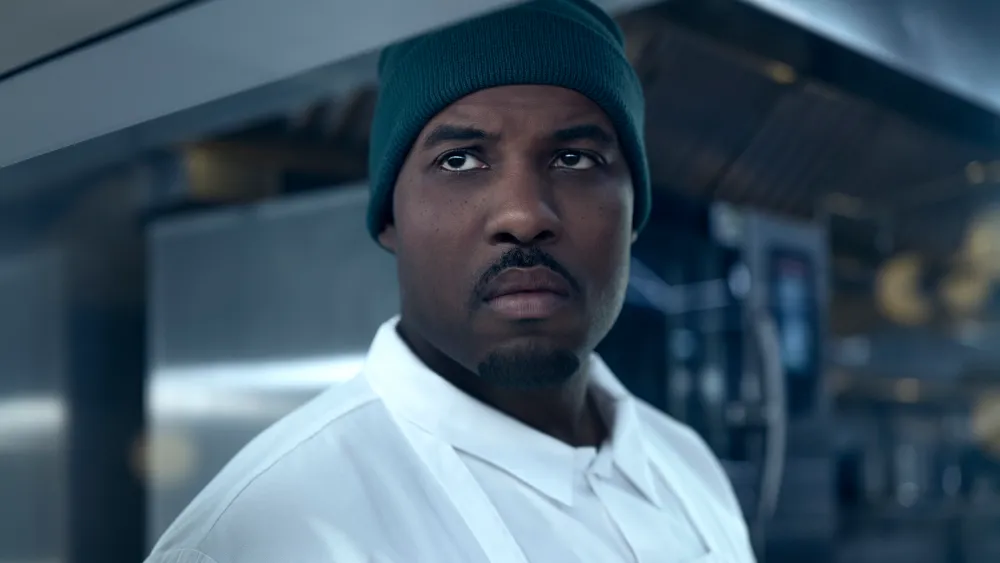
Boyce delivers some of his best work in Season 5 of “The Bear,” which was created by Christopher Storer. The season takes place largely over the course of one night, and finds the chefs battling a storm, supply shortages and a dried-up bank account during what could be the restaurant’s last service. (Much of the season plays out like the night before the White Walker battle in “Game of Thrones” — but with seared scallops instead of swords.)
Carmy (Jeremy Allen White) has announced he’s leaving the culinary industry, and Marcus’ pastry buddy Luca (Will Poulter) tells him he’s moving back to Copenhagen. Plus, Marcus is still grieving his mom, and he invites his absentee father to the restaurant so he can serve him a sundae in place of a long overdue heart-to-heart.
Below, Boyce unpacks how these factors push Marcus to his breaking point, and he explains why this season was his “most intense” shoot yet.
Has “The Bear” changed your relationship to food?
It has. I’m a more adventurous eater now than I was before doing the show. I have the curiosity to research like a chef, even if I don’t put it into practice.
The final season just dropped, and people have started to binge. Are there things you think will surprise people?
Personally, I was worried about it. “Worried” is the wrong word — but it’s the risk that comes with characters that people have taken so much ownership over. After four seasons of a show, everyone knows these characters, and they anticipate where they want things to go. What Chris and the writers have always done well is find a way to zig or zag in a way that feels organic. So, with every season, I’m wondering how people will perceive it.
This season, that was amplified because of Marcus’s arc. Through all his ups and downs he’s remained consistent, and been people’s release of tension — and this season, he’s kind of causing the tension.
The season mostly plays out over the course of one night. Did you shoot chronologically?
We shot the first few episodes in order, but Ayo [Edebiri] and Ebon [Moss-Bachrach] had Broadway plays, so they had a hard out. We moved things around, but there were a couple episodes later on that we shot in order, like Episode 6. The first 10 or 12 minutes of it is almost in real time without many cuts, so it had to be highly choreographed.
I would imagine it would be easier to build up to Marcus’ anxiety until it boils over in Episode 5.
What I love about making this show is that it’s a full, working kitchen. Even something like the rain this season — they built this whole contraption on the stage for the rainfall. It’s so easy to immerse yourself. When they call action, all five senses are in use at once. There’s this inherent tension because it feels like the walls are closing in — you hear six people yelling, you smell the food, everywhere you look someone looks stressed. It doesn’t take much to get that tension going. The way they captured the season, too, with all the tight shots and quick movements — this was the most intense shoot to me, personally.
Because of how it was shot, or because of the emotion behind the final season?
I think it’s both. Emotionally, knowing it’s the end, you’re dealing with feelings you’re trying to hold at bay. Every time I was on set I was like, “This is it.”
Can you talk about Marcus lashing out at Luca? What’s going on in that moment?
There are four or five layers he’s aware of, and many more beneath the surface. He’s feeling lost and hurt — it feels like the restaurant is closing, and two of the people he’s closest to are abandoning him. Luca and Carmy are two formative people who shaped how he approaches his craft, who brought the technique and the passion, who opened this door for him and encouraged him. And now it feels like they’re jumping ship at the moment when there’s no hope left. There’s no food, no money, it’s all going to hell — and they don’t care. He has no one to turn to. The people he would lean on, whose eyes he’d look into for comfort, are gone.
Marcus has watched his mother get sick and pass away, dealt with all of it on his own, no siblings. And the people he leans on as family are leaving. Mix that with the pressure of the bad day, of will we have enough food, will I even have a job tomorrow — it just lays the perfect conditions for someone to lash out. On top of all that, there’s the door he’s opened with his father — all that history that isn’t on the surface. I have to credit Harry Lennix here, because to come in and play such a loaded character with so few scenes, and deliver it the way he does, is a testament to how great he is. When I met him, there was a human in place of this idea. He has such a big voice and such a large presence. It’s intimidating, because he reminds me of my father in a lot of ways.
Read more Starz to Develop ‘Bone Parish’ Series Executive Produced by Curtis ’50 Cent’ Jackson
How much of a backstory did you create for Marcus’ relationship with his dad?
I had always asked Chris questions about what his family was like. When you’re acting, you come to conclusions for yourself. And then as the writers write more, they go, “I know you were thinking he had two siblings, but actually it’s just him and his mom.” Chris told me Marcus had only seen his father a couple times, and that’s as far as it goes. His dad wasn’t there for any of the moments with his mom. So I took that and built off of that. He’s like a ghost in his life. When you lose one parent, all it does is make you think about the other one.
In Season 4, when his dad reaches out after his mother’s passing, that made me have even more questions. I remember wanting Marcus to meet up with him — I wish that conversation could have happened there. I felt mad at Marcus that he bailed. Chris and I talked about it, and for Marcus, it was about doing things on his own terms. Marcus has always been malleable. He always makes things easier for others, so to stay firm in a moment where he could satiate his father’s feelings but instead decides to protect himself — I found that very powerful.
Marcus decides to reunite with his dad by serving him. It’s an interesting dynamic.
It’s on Marcus’ terms now. From Marcus’s point of view, maybe his father just wants to clear his conscience and his guilt — like, “I wasn’t there, but I can meet him once and do this.” Marcus doesn’t want that. Everyone’s dream is to do something you love and get to show people what you’ve accomplished, to express it. To me, Marcus’s whole journey has really been a journey of expression. This season, he has gotten this award and thinks, “I’m going to invite my dad in and show him this is who I am; this is what I do.” Even that moment when he insists on bringing the dessert out himself and serving his father, telling him to sit down — it’s like, “No, we’re doing this my way. You sit down, we don’t need to talk. Just let me show you who I am, rather than using words.” You can choose to not listen to words, but you can’t ignore the other senses.
It’s a continuation of the nonverbal communication he had with his mom.
Yeah, that’s true. You’re 100% right. It’s the quiet moments with Marcus that I love most about him. He communicates with his dad through his sundae.
The scene where he cuts the candle in half to reveal the hot caramel inside is sort of breathtaking.
It’s fun. It reminded me of who Marcus is from the first episode of the show. He’s like a child on the inside. It’s like a child presenting a magic trick.
In terms of Marcus’ final scene with Luca at the airport, do you feel there were things left unsaid? Or was there resolution between those characters?
I think there was resolution. There’s an understanding of “we’re brothers.” You fight with family. They’ll see each other again at some point. It’s a bittersweet goodbye. Marcus has come to understand that he’s not alone. He’s got people, everything is all right. He’s moving on to what’s next.
Over the course of five seasons, Marcus’ confidence has grown, and, in many ways, he’s found himself. I wondered if your experience as an actor mirrored what was going on in the show?
Yeah, 100%. I’ve always felt like it’s life imitating art or art imitating life — I’m not sure which one is leading anymore. Season to season there have been different things that I was scared to try, and because of this show, it’s been as simple as deciding, “I’m just going to do it.” They believe I can do it, so I’d rather do it than chicken out. That was my mentality in the first two seasons.
As I moved past that, I learned a lot from conversations with people like Ebon and Liza [Colón-Zayas] and others on the show — they’ve instilled a lot of confidence in me. Even with things like doing press, which I didn’t like early on, I remember in the early days I just wouldn’t talk much. And Ebon said something that felt small at the time, like, “Why don’t you speak more? You have a lot of good thoughts. Don’t get so in your head about it.” That gave me the confidence to let my curiosity lead more than my fear.
That’s the parallel with Marcus. Early on, the way he approached desserts, he was trying things trepidatiously — in Season 1 he’d present something to Carmy or Syd and watch them taste it, like, “Is this good?” And as he kept going, he stopped looking to them for that validation. He just focused on his own curiosity and passion.
I think that’s the cool thing about a show where the characters keep progressing — the writers are exploring different feelings, and I have to find my own entry point into those feelings. Some of them aren’t things I’d normally express, but doing it on the show has allowed me to bring more of it into my own life. It feels like an organic expansion — each one is progressing the other.
How do you say goodbye to a character like Marcus? Do you have any rituals?
I’m probably one of the worst at saying goodbyes. I think, “Maybe it’ll be easy if I pretend I’ll see them again tomorrow.” It still finds a way to sneak up on you, and that’s what’s happening to me with this show. The truth is I don’t know how to say goodbye. I think I’ll just let it linger until one day I look up and it’s not there anymore.
Do you feel in your heart that this is the last time you’ll play the character?
I think so. It would be a surprise to me just like it would be a surprise to everybody else. Maybe it comes back around, but I don’t think so. I think this is it, which is cool. I’m happy with that. The journey felt so complete. There isn’t something I wish to go back to and explore. This feels like a satisfying place to leave the character. There wasn’t anything left on the table.
Did you take any souvenirs from set?
I wish I took more. I took some of my favorite pieces from Marcus’ wardrobe. I took a couple of aprons. I took some of the books. I would have put as much as I could possibly fit in my bag, but it was the last day, and I was slightly overwhelmed. The moment they yell “wrap” and you’re saying goodbye, you go blank. You’re blank for the rest of the day. I felt like my feelings were distant from me. I tried to remember everything — to record it with my eyes so I could think about it later — so I wasn’t in my right mind to steal everything I needed to steal.
This interview has been edited and condensed.