
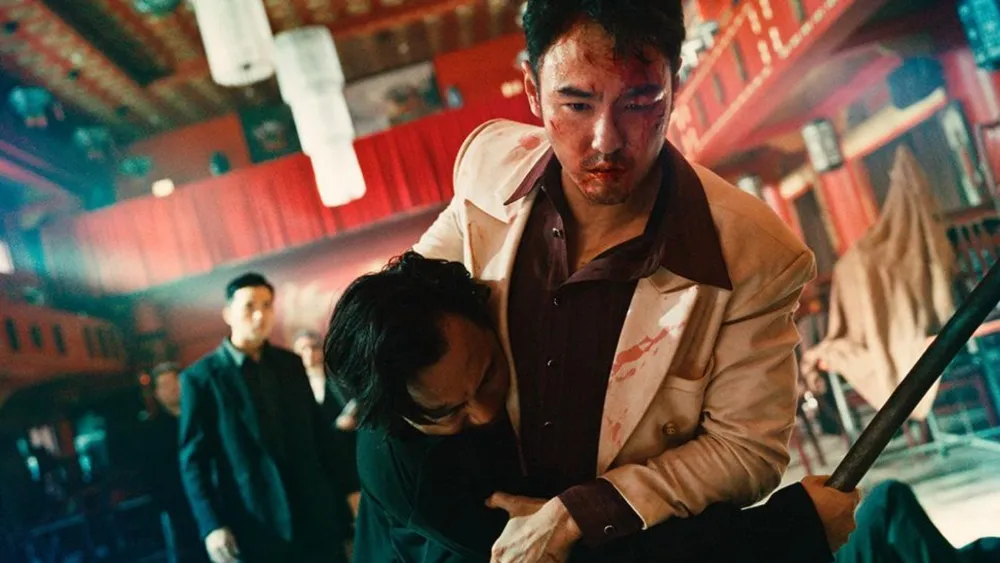
Sabu, the Japanese director of Venice and Toronto-bound “Arrested Memory,” says the film’s nearly two-decade journey to the screen – after stalled attempts to shoot in Germany, Korea, the U.S. and Japan – left it with more tension and poignancy than the version he first wrote.
Read more BBC Names Chris Sussman Director of Comedy
Variety is unveiling the first trailer for the film.
“I was confident that the script had something special, so I always believed that it would eventually be made. It was really a matter of waiting for the right opportunity and the right timing,” Sabu tells Variety. “Compared with the film I envisioned in 2007, I think the finished version has more tension and a greater sense of poignancy.”
Sabu made his directorial debut with 1996’s “Dangan Runner,” and built his reputation on genre-blending, tension-and-release comedies including “Postman Blues,” “Monday” and “Miss Zombie.” “Arrested Memory” was finally shot in Taiwan, with cast and crew drawn from Taiwan, Japan, Hong Kong and France. The thriller follows a police detective who loses his memory, a premise Sabu used to rework his central character over the years the project spent in development.
The film’s protagonist Lee was originally conceived as a corrupt detective before Sabu turned him into a respected, judo-trained officer. “Originally, Lee was a person with a strong sense of justice who became a police officer because he wanted to protect people. However, over the course of 20 years, he lost something important, his convictions gradually began to waver, and eventually he became a corrupt police officer. That was the original setup,” Sabu says.
“Now, 20 years later, rather than simply portraying him as a ‘bad cop,’ I thought it would be more convincing and interesting to show someone who was once trusted by those around him gradually returning to his more innocent, authentic self after losing his memory,” he says. “I also felt that adding judo would allow me to express Lee’s humanity – the idea that he protects people through his actions rather than through words.”
Memory loss also gave Sabu a way into questions of identity that a conventional crime story would not allow. “When there is no information or set of conditions influencing us, we open our hearts to kindness when it is offered. If we are pursued or attacked, we run away or fight back. Human relationships are always a process of reflecting one another, and those accumulated interactions ultimately shape who we are,” he says. “I wanted to enjoy observing what the protagonist sees and feels, and how those experiences are projected onto him.”
Sabu cast Ethan Juan, known for serious dramatic roles, and pushed him toward comedy. “I needed someone who could deliver a truly excellent serious performance. My comedies are built on tension and release. The more seriously an actor plays a situation, the more humor can emerge from it,” Sabu says. He adds that Juan’s work reshaped the character on the page: “Ethan’s performance added an even greater sense of poignancy to the character as originally written.”
Taiwan became the film’s home after the director considered several other countries. Working across four filmmaking cultures shaped the production and left Sabu wanting more of it. “Working with people from different filmmaking cultures created a unique atmosphere that could not have been achieved otherwise,” he says. “Through this experience, I’ve become even more interested in making films in different countries and places. I feel that working with people from different countries and cultures creates the possibility of discovering something new that I could never have imagined on my own.”
Sabu drew nearly 2,000 storyboarded shots before production began, then went through 58 versions in the edit. “It’s not particularly difficult. In fact, I expect something to emerge that goes far beyond what I imagined, so I’m completely comfortable with it,” he says.
Asked what he wants cinema to do for an audience after three decades of filmmaking that has spanned action, comedy, horror and fantasy, Sabu points to entertainment above all else. “I make films to entertain audiences. I’ve always wanted to make films that leave people in a slightly better mood than when they started watching,” he says.
Sabu already has his next projects lined up. “I have two completed scripts. One was written seven years ago, and the other two years ago. I think they’re both very interesting,” he says. “When I write a script and approach it with genuine commitment and sincerity, ideas come down from somewhere about 45 degrees to the upper right. Please look forward to what comes next.” As to what follows “Arrested Memory,” he describes it simply: “A love story that will make you cry.”
Lucky Number is handling international sales.
Watch the “Arrested Memory” trailer here: