
Paramount Skydance CEO David Ellison may think the promise of the Paramount Warner Bros. Discovery mega-merger is an offer we can’t refuse, but I’m here to say: He’s wrong.
Read more NowThis Hires Georgie Guinane as Head of L.A. Studio
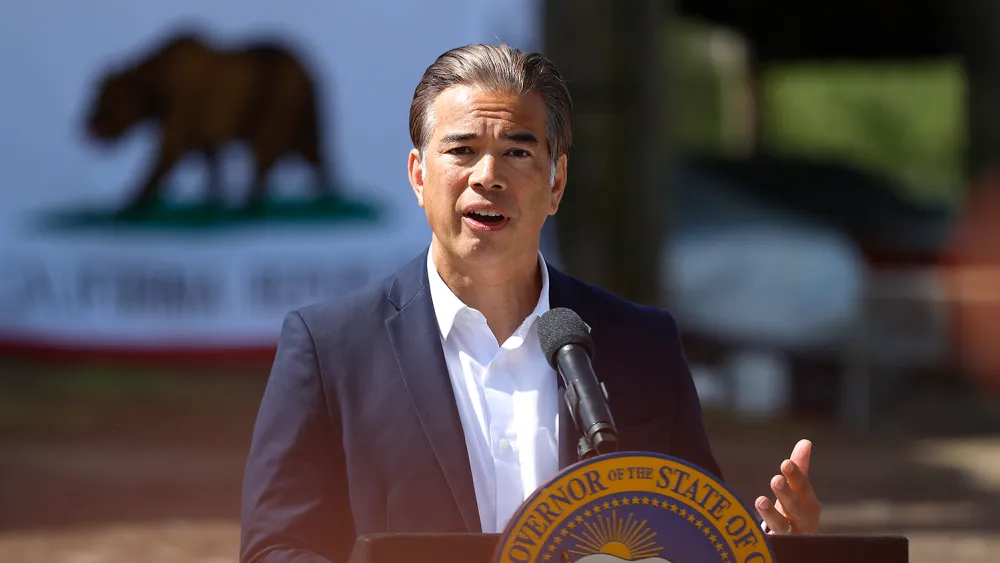
I am leading a coalition of 12 state Attorneys General in taking Paramount and Warner Bros. to court to stop this unlawful merger.
The entertainment industry doesn’t exist simply to hawk movies and TV shows like they’re any other commodity. It exists to tell stories, spark ideas and curiosity, inspire and inform, and open our eyes to new perspectives that we may never have encountered otherwise.
It’s why movies and shows so often play a starring role in our lives — in first dates and last dates, cherished family memories, debates over dinner, moments of quiet self-care, and moments that bring communities together, as we’ve seen throughout the World Cup.
Whether it’s the living room TV, the big screen, or the small devices we carry everywhere we go, there is no doubt that the entertainment industry touches the lives of Americans daily.
That is why we should all be concerned about the $110 billion proposed merger between media giants Paramount Skydance and Warner Bros.
By combining two of the five largest film distributors and two of the five largest basic cable channel owners, the resulting media behemoth would control nearly one-third of theatrical movie distribution and nearly one-third of basic cable channels. It would control more than 30% of the blockbuster release distribution that buoys the movie theater business and 50 of the most popular cable TV channels, spanning an unrivaled slate of news, sports, entertainment, kids, family, factual, and lifestyle content.
Giving that much power to one media company would wipe out competition, jack up prices, hurt the quality of content we’re offered, and bring fewer movies and shows to our screens. Combining cable news channels would mean fewer journalists informing our electorate and fewer opportunities for Americans to hear the full breadth of information and opinions on a subject. Consolidation would mean fewer voices speaking truth to power and fewer documentarians, filmmakers, showrunners, producers, writers, and artists shedding light on important stories that too often go untold.
That’s a death knell for the film and TV industry — and for our democracy.
For more than a century, Paramount and Warner Bros.’ fierce competition has fueled powerful projects that have stood the test of time. We’re talking about “Titanic,” “The Godfather,” “The Matrix,” “Barbie,” “Harry Potter,” “Lord of the Rings” and “Casablanca” — just to name a few.
If we allow them to extinguish the flame of competition, they will no longer have the same incentive to distribute their best, most creative work, to innovate, to greenlight interesting and risky projects, and to offer viewers fair prices.
Read more Jimmy Kimmel Mocks Mitch McConnell’s Proof of Life Photo Amid Questions Over Senator’s Health
Competition is the heartbeat of a vibrant entertainment industry, just as it is the lifeblood of a healthy economy.
Competition ensures that companies rise to the top based on what they put in the market, not based on backdoor deals. And, it ensures that consumers have an array of choices in both product and price. History has shown us that consolidation in markets at the center of American economic life does not serve our economy, consumers, or competition well. Instead, it leads to increased unaffordability, a loss of good-paying job opportunities, and fewer choices for consumers. Just think of the robber barons of the Gilded Age who dominated the oil, railroad, and steel industries, pocketing obscene profits while exploiting workers, corrupting the political system, and squashing potential rivals.
Monopolies give too few too much power. That’s why we have antitrust laws to prevent them and control mergers. Laws like the Clayton Act, which this proposed merger violates. Antitrust enforcement is democracy’s check on oligarchy. It’s a check on wealthy businesses seeking to game the system and cheat to knock out competition. It’s a check on billionaires currying favor with the president so he’ll do their bidding and hand-pick winners and losers, bypassing the law and the meritocracy that makes our economy thrive. And it’s a check on the elite few who think they’re above the law, when they’re not.
No one is. No company is.
If you need proof that antitrust enforcement fuels a healthy economy, just look at California. We’ve got some of the strongest antitrust and consumer protections on the books — protections we are not afraid to uphold. And, at the same time, we’re the fourth largest economy in the world, home to more Fortune 500 companies than any other state, and home to nearly two-thirds of all U.S. venture capital investment. That’s no accident.
Americans deserve fair prices and a fair market. They deserve options. They deserve to know that they’re not being cheated by corporations that break the law, and take advantage of workers and consumers to fill their coffers.
We are taking Paramount and Warner Bros. to court to preserve an industry that has the power to make us laugh, cry, question, and take action. To protect an industry that helps shape who we are, how we see the world, and what we care about.
As Attorney General of the Golden State, I am proud to stand up for an industry deeply ingrained in California’s history, identity, and economy.
With this lawsuit, we are standing up for a free and fair market, not a rigged market. Because America has no kings in government or our economy.
Read more Rhett & Link’s Mythical Promotes Jacob Moncrief to President, Who Takes Over for Brian Flanagan
Rob Bonta is the attorney general of California.